Sunday, April 26, 2020

The stock market crash of 1929 and the market crash of the late 1990s & early 2000s...

...were a lot like the coronavirus crash right now.

Here’s what they have in common…

Billions and billions of dollars were lost in the real estate market, the stock market, and so many businesses had to close.

However, smart people who were mentally, emotionally, and strategically prepared made more money in those times than at any other time in history- John Assaraf


Tuesday, April 21, 2020

🔶Webinar by IMF The present scenario COVID19

🔶Webinar by IMF, Chaired by Mr Raghuram Rajan,  this morning (20/4/2020)Key takeaways are as follows.

🟢General Outlook

1. India seems to have supressed the curve so far. It looks like it might escape the worst of the pandemic, but will have to be cautious about it.
2. Possibility of W Curve – i.e. There is a good chance of re-occurrence of the virus, which could see a possibility of regular lockdowns. Businesses need to plan accordingly.
3. Capital will look for countries that are less battered. Western economies are badly battered while countries like India, Indonesia, etc are not so battered. Global Capital could flow into India, if we can act efficiently to pull it.
4. Emotional and Economic backlash against China is expected. Already, countries and companies are working on strategy to pivot away from China as part of their supply chains. Japan Govt has announced packages for it’s companies bringing back manufacturing home. Businesses need to keep this in mind and work accordingly.

🟢Discretionary Spending.

1. For individuals, health and safety will become No.1 on their agenda from the 3rd of 4th place. There will be more spending on this area and reduction in other discretionary spends.
2. The ticket size of spending will drop for a while. People will spend on cheaper goods than on expensive goods, or delay spending for a while.
3. Extreme acceleration in digital economy. I.e. Home education, home entertainment, home fitness, etc
4. Loyalty shock. People will be less loyal towards brands as other aspects will take over. People will switch brands faster due to various other concerns like safety, etc.
5. General Trust deficit. There will be trust deficit amongst stakeholders like vendors, customers, employees, borrowers, banks, etc. Banks will have trust deficit with borrowers, companies will have trust deficit with suppliers, etc.

🟢Liquidity and P&L
1. Segregate Good Costs and Bad Costs
a. Good costs (Eg. Digitization, tech costs, digital marketing, best employees, etc) need to be insulated and protected
b. Bad Costs (Eg. Fancy office, unnecessary spending, bad performers, traditional working methods) need to be ruthlessly eliminated. Don’t be emotional about non-core businesses. Concentrate on core business.
2. Be Frugal – Not necessary to have fancy office, fancy cars, excess employee strength, etc. Remove all the flab and be lean.
3. Maintain Good behaviour – have frank and open conversation with all stakeholders like suppliers, employees, etc and try to find the middle ground, so that the burden can be shared justly.
4. Be Future Ready – In this crisis, there will be winners and there will be losers. Those who re-orient their strategy will be winners.

🟢Govt Stimulus.
1. Economy was in poor shape even before Covid. The govt has little leeway to provide large stimulus.
2. Govt earns about $60-70 billion a week from taxes. Imagine what a hit a 5-week lockdown will have. Size of Indian economy is about $3 Trillion. In some scenarios, it is predicted that Govt could take a hit of nearly $1 Trillion.
3. Inequality has already sharpened. The gap between rich and poor has further increased. Govt needs to concentrate on mass health and mass welfare. If not, 200 million people could sink into poverty.
4. Govt must explore printing currency (Quantitative easing), but there are limitations here. It has side effects like inflation, etc. Rich countries have more leeway for such quantitative easing.
5. Govt must concentrate on grabbing more capital from outside and do reforms to enable that.

🔴Result of backlash against China

1. Internationally, there could be an emotional and economic backlash against China.
2. Businesses with supply chains passing through China will need to keep this in mind and insulate themselves and build alternatives.
3. India and Indian businesses need to try to become the contract manufacturer of the world, just like China is. India needs to make use of this opportunity smartly.
4. All big wealth funds and soverign funds will be awash with Liquidity. This liquidity needs to be attracted to India.
5. In every sector, there are good and bad companies. Management has to invest correctly in manufacturing and modern tech, be honest and fair to all stakeholders, etc., Those companies with good management and displaying good behaviour will come out victorious.

🟢Export Business

1. Indian exporters need to build trust. They need live up to the promises made. They need to deliver on time and deliver the promised quality. They shouldn’t make incorrect promises just to get more business.
2. Bangladesh export business has built trust and a good reputation. Despite a chequered past (low quality, human rights issues, etc) they have managed to overcome and are winning.

🟢Wholesale, Retail, etc.

1. More people will prefer to buy from retail stores where there is perception of safety (Eg. Sanitation, cleanliness, crowds, etc). They will move more towards malls away from markets. Many will move towards online stores. Wholesale suppliers also need to concentrate on such retailers.
2. Customers also need to be ringfenced:
a. A high end restaurant in Delhi is giving 40% of bill value as a gift coupon to be used anytime upto December 2020.
b. Car companies are giving buy back offers, incase the customer loses his job in the next one year.
3. Pricing needs to be re-approached. People are looking for cheaper prices or cheaper goods.

🟢Brick & Mortar in Discretionary Spends.

1. Cinemas could take a big hit in the near future. Entertainment could move home.
2. Because of this, cafes and restaurants might see some increase in business. Many chains are implementing measures like social distancing like lesser furniture, etc, to build confidence to consumers.
3. Smaller retailers need to send a message of safety. Eg: Have sanitisers, put up notice of no Covid positive employee found in the store, maintain social distancing, etc.
4. Since travel and tourism will take a big hit, connected purchases will also shift. Purchases that happened abroad will happen at home. (Eg. Electronics, Luxury goods and apparel, etc.,). But travel related purchases will drop.

🟢Real Estate

1. Indian real estate economy is sitting on a huge inventory with a huge cost-of-carry
2. The industry is highly leveraged with low margins.
3. Unsold inventory is considered as an appreciating asset, but might turn out to be a flawed view.
4. Market was already overdue for a huge reset, which will be accelerated by the pandemic.
5. Also, the sharing and co-working space could be hit as more businesses try to have their own smaller spaces and more WFH (Work From Home) employees.

🟢Jewellery etc.

1. Gold-as-an-asset could see appreciation.
2. Jewelry, as a discretionary spend, will take a hit.
3. The Indian wedding industry will take a hit, as social distancing, cost consciousness, travel avoidance, etc., will prevent fat weddings, destination weddings, etc. This will hit all connected industries. (Eg. Silk, partywear, etc)

🟢Financial Markets

1. There will be value destruction and value creation in different companies in the same sector.
2. High Debt low margin companies will find it difficult. (indicates risky or unscrouplus management)
3. High Debt high margin companies could be rewarded, but caution needs to be exercised. (may indicate sharp or dynamic management)
4. No debt high margin companies are best rewarded now.
5. Know more about the CEO and management and their actions and activities.
(Eg: 3 branches of Starbucks were kept open in India for last few days. The CEO of Starbucks India sat in the Fort (Mumbai) branch throughout the day to give his employees confidence and motivation)
6. New tech unicorns will be born. Those involved in cyber security, cloud services, online education services, etc.

🟢Forex Markets

1. No doomsday scenario (i.e. Dollar will become 90 rupees etc). Such scenarios don’t seem realistic
2. Govt should be buying as much oil as possible, as such prices may never be seen in the future of oil.
3. As the western economies are more battered and Indian economy is less battered so far, there is more liquidity coming in. That’s why there is a rally in the market. This scenario could change depending on the spread of the disease in India.
4. Watch out for sharp spikes in the market. Better to avoid the spikes.

🟢Outlook for near future.

🔷Large Companies
a. Huge concern seen for employees. Companies are paying the employees even when closed.
b. HUL Decided not to cut a single rupee for their suppliers, service providers, etc. No haircuts.
c. Safety of employees and customers is becoming a major point of focus.
d. This is possible because they have reserves of funds, etc that have been built up over the years.

🔷Medium and Small businesses.
a. They have to work with thin capital reserves. Excess capital is taken out of the business and applied into personal assets.
b. Small businesses take out the surplus and purchase personal assets instead of re-investing in the business. There are various factors and motivations here.
c. Because of this, they are unable to meet the cash expenses of even the next month.
d. A high end restaurant chain in Delhi (with Rs.40 crore annual turnover) is unable to pay the salaries of the current month as it has no liquid reserve. Owner has invested in personal assets like house in London, etc.
e. Medium and Small business need to have a look at how they can build some business reserves to endure such disruptions.

⚫”Force Majeure” in Contracts
1. Should force majeure clauses be triggerd in various contracts like rent, supply, etc? It will lead to litigation, but there is no point in getting into litigation now.
2. All parties have been affected by the crisis. The tenants, the landlords, the lenders/financiers, etc.
3. Parties need to sit across the table and find a common ground and mutually decide upon the costs, rentals, etc. Burden has to be shared.

🔷Work From Home Scenario.
1. It is possible for lot of employees to not visit the office and still be productive.
2. In RBL corporate office, it is found that it is enough that only 30% staff stay in the office. Others can be connected from homes. This leads to lesser commute expense, stress of the commute, time wasted, etc.,
3. Parents can take care of children more effectively when WFH (Working From Home). There can be dark hours when no calls will be made, etc.,

🟠Optimism🟠
As per a McKinsey survey of entrepreneurs released few days ago, 53% of Indian entrepreneurs are optimistic, while only 25% of Japanese entrepreneurs are optimistic.
It seems to be a mild U-Curve for the Indian economy. But the descent has not stopped yet.⚠

Tuesday, April 23, 2013

Keeping separate accounts

Even if a business is small, separate accounts teach financial discipline,” says Certified Financial Planner Cathy Curtis.

Keeping separate accounts also has other benefits for freelancers and small business owners:
  1. Organization. It makes it far easier to track expenses and payments for your business if they’re not intermingled with personal stuff like your credit card bills and that fro-yo you bought at lunch. As Lauren Lyons Cole, CFP says, "Separate business and personal bank accounts and credit cards simplify record keeping.”
  2. Taxes. A lack of separation may cause more scrutiny with the IRS. In addition to the audit risk, there’s also the matter of delineating business expenses (and proving they really were for your business) if you want to claim them as deductions. “Keep them separate from the beginning—don't wait," says Cole.

Friday, March 1, 2013

How to Get Your Mojo Back and Do Big Things Today

Life is a wonderful thing. With the exception of a few extraordinary circumstances, no matter what happened yesterday, you get a fresh start today. If you had conflict at the office yesterday, today is your chance to resolve it. If your diet went off track, today is the best day to start again. Feel like you've lost your mojo on a project or resolution? No fear. Today, our friend Jonathan Fields gets you back on the road to success. It doesn't matter what day or month of the year it is now. You don't have to wait for January 1st. You can start again today. And you will finish strong soon.

Craig Ballantyne

"Watch yourself as you go about your daily business and later reflect on what you saw, trying to identify the sources of distress in your life and thinking about how to avoid that distress." - William B. Irvine, "A Guide to the Good Life: The Ancient Art of Stoic Joy"
By Jonathan Fields

Resolutions don't change bodies, minds, careers, businesses and lives, actions do.

But, without the right approach, it can be near impossible to take the actions needed to get where you're desperate to go!

Behavior change--exercise, diet, meditation, changing careers or launching a business, writing a book, making art--is hard, really hard. Most people fail. Not because they're incapable of doing what needs to be done, but because they don't know how to do it right.

They don't know where to find valid information. They don't know whom to trust. They don't understand what it really takes to cultivate substantial progress and change. And they don't know how to create the structures that absolutely must be in place to support the small daily behaviors that culminate in extraordinary change and achievement over time.

Here are the 7 keys to successful behavior change and quest achievement:

1. Knowledge

You must know what the right behaviors, actions and decisions are. If you want to lose 50 pounds, you need to know what action will lead to that outcome. If you want to launch or build a world-changing venture, you need to know the steps that will make it happen (and more importantly the ones to avoid that'll tear it down). If you're trying to build a good life, you need to know what goes into that bucket and what needs to be tossed.

2. Support

You need support on three levels, if possible: peer support, co-striver support and mentor support.
  • Peer support is critical as a source of inspiration, information and accountability.
  • Co-striver support (people who are striving to do similar things at similar times) adds the element of creating what's called a "normalizing" experience. Knowing a tight-knit group of co-strivers are going through similar struggles, embracing tough challenges and working through them makes you realize you're not alone and, although it's tough, there are others right there with you and you're all going to get through it together. Note, too, you don't all have to be working on the same thing, project, quest or organization. It's more about sharing the experience on the level of parallel play.
  • Mentors and coaches are people who are further down the road than you who can share wisdom and insights designed to help you correct course, avoid mistakes (though, some you'll have to make yourself to get how to do it right) and accelerate your quest. Most important when finding and choosing mentors and coaches, too, is that (a) you trust them, (b) they're genuinely qualified to help you, either through training or experience and (c) they're invested in your success and genuinely care.
Collectively, these people come together to form your Circle of Champions. Research shows, having this group artfully chosen and fully-committed to your vision ups your likelihood of success exponentially and often shortens the time frame and makes the dance far more enjoyable.

3. Motivation

You've got to have a clearly established "why." If it's a simple change or goal you aspire to, old school carrot and stick, i.e., extrinsic motivation will often get the job done.

But for longer term, more complex, involved quests, a deeper, more intrinsic, internal source of motivation will be a stronger driver of consistent action over time, which is what determines success.

One key to intrinsic motivation is something I call "alignment." When the behaviors you're looking to cultivate or the quest you aspire to complete is poorly aligned with who you are and what makes you come alive, it makes the process so jarring to your system, your likelihood of doing the work to needed to succeed plummets.

When what you're trying to build is so tightly aligned with all aspects of who you are that it feels like it's an organic extension of your being, you'll still end up working like crazy to get it done, but it will feel far more effortless. High-levels of alignment tend to jack intrinsic motivation through the roof. And they keep it there longer. Your "why" is more about DNA than packaging.

This can be a huge issue with aspiring entrepreneurs and career changers. In addition to personal alignment, you also need to align business model, mode of delivery, creative orientation, leadership orientation and a number of other "degrees of alignment" that will be specific to your quest.

When you understand how to tee it all up right, your quest sings. You don't ever need to look for a reason to do the work. Problem is, very few people know how to do this well.

Instead, they align their actions and vision with what they think will succeed, what looks good or "justifiable" on paper, rather than aligning their quest and actions with the fiber of their being. Huge mistake.

Because even if you end up building something the world deems successful, you'll end suffering way more than necessary and will be significantly more likely to have built a business or achieved a quest the world deems a success, but you experience as a miss or, worse...a cage.

4. Simplicity

Legendary Stanford professor, B.J. Fogg, has studied persuasion for years and devised his own model for behavior change. One of the big discoveries, simplicity trumps information. Take the complexity out of your approach and make it as easy as possible to learn what to do and then do it.

When it comes to action-taking, simplicity rules, complexity drools.
If you want to exercise every morning, leave your running shoes and clothes right next to your bed when you rise and have a running partner meet you every morning outside your door.

I meditate for 25 minutes every morning like clockwork, no matter my schedule is the rest of the day. And no matter where I am in the world or how tired I may be when I awaken.

One of the keys has been to prepare my meditation area before I go to bed. I set up my cushion, a glass of water, my timer, and a blanket if it's cold. I remove complexity and, more important, I remove decision-making from the system.

What you'll find is that it's not the doing of the thing that's hard. It's the beginning. Once I'm on the cushion, the next 25 minutes flow with relative ease (okay, so maybe that took a bit of practice).

But research shows beginning a task or a process is a far greater challenge than continuing it once it's begun. So make it as simple as possible to begin.

5. Measurement

You need to create a very clear picture of what success looks like. Because if you don't, you wont understand what you're aspiring to. Nor will you know when you've arrived.

Things like mission statements, painted pictures, perfect-day exercises, outcome visualizations, they can all help you understand where you're going and what your personal metrics for success are.

But, when you're in the part of any quest I call The Thrash, you often don't yet have a clear beat on your metrics for success. But you still need something to strive for. You need something to measure. You need to know if you're moving forward, backward or sideways.

While you're in this part of your journey, your Circle of Champions will be a powerful source of guidance (and sanity) to allow you to divine and refine what matters and what's worth measuring. They will see things that you are blind to.

6. Framework

Once you have the first five in place, you need an action framework. A plan of action that's not just some one-size-fits-all, but rather a simple to use methodology (again, if it's complex, it won't work) that allows you to:
  • Identify the daily, weekly and monthly actions needed to get from where you are now to where you want to go.
  • Memorialize them, either in writing or digitally.
  • Track progress over time (this, according to the work of Professor Teresa Amabile, is critical).
  • Adapt to changing circumstances and new information, without losing momentum
There is no one-size-fits-all here. Some great approaches to explore include systems by Productive Flourishing's Charlie Gilkey or Behance's Action Method

7. Ritual

This may be last but it may also be most important. You must break the giant action steps of your quest into bite size habits, turning the big action steps from intimidating behaviors into easy rituals.

What's the difference?

Behavior requires willpower. Rituals happen auto-magically.
Rituals (or habits) are behaviors repeated in a systematic way over time that move from conscious choice to autopilot action. The more you ritualize success activities, the more you free-up brainpower and willpower, making it more likely that you'll do the things needed to change what you're trying to change.
When you're building behaviors and actions into rituals that require some level of will, you're better off building the ritual into the earlier part of your day. This is because willpower is a limited resource and by late afternoon, your tank starts to run pretty close to empty.

If it's a behavior you actually enjoy or are intrinsically drawn to, like painting or playing guitar or creating a product, business or service you love, these will generally require far less willpower. Time of day becomes less important.

Putting It All Together

Does all of this take effort?

Darn straight it does.

But the cost of not putting in the effort is worse. Not doing the work leads to a life of futility, unrealized potential, of unexpressed humanity and unrequited connection. I'd rather do the work than muddle through life with my soul-tank, my body, my mindset, my relationships, my art, and my potential perpetually on half-empty.

So, what's the best time to reclaim your quest?

Right now.

No matter what your goal, now is the time to move your body, eat better, meditate, set the wheels in motion for a new career, start a venture, business, or movement or create the art buried in your soul.

Just take action right now.

Your likelihood of success goes up massively once you've put the above keys into place. Do the work, find the people, create the systems, implement the knowledge, and build the support needed to breathe life back into your life.

And most important, Commit.

"Until one is committed, there is hesitancy, the chance to draw back, always ineffectiveness. Concerning all acts of initiative (and creation), there is one elementary truth the ignorance of which kills countless ideas and splendid plans: that the moment one definitely commits oneself, the providence moves too. A whole stream of events issues from the decision, raising in one's favor all manner of unforeseen incidents, meetings and material assistance, which no man could have dreamt would have come his way."  - W. H. Murray

The Best-Paying Jobs For Women In 2013

http://www.forbes.com/sites/jennagoudreau/2013/02/28/the-best-paying-jobs-for-women-in-2013/

Thursday, January 3, 2013

Lessons from Grandparents (by Michael Zink)

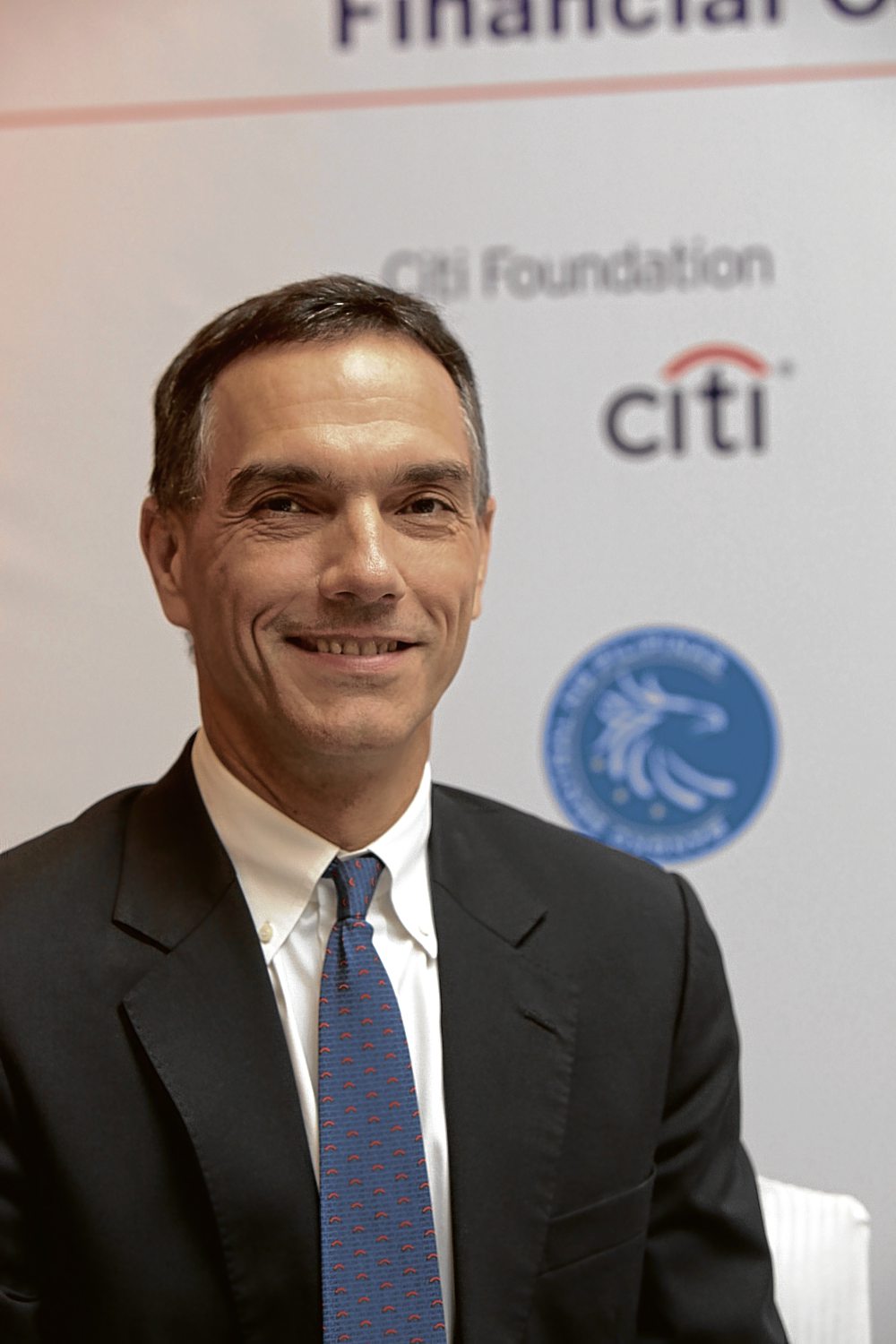
Michael Zink, head of Citibank for Asean and Singapore country officer, laughs as he catches himself quoting yet again his grandparents. “May be I should write a book—“What I Learned from My Grandparents.”
Indeed, when it came to the subject of financial literacy, Zink, who has a Master in Business Administration degree from the Kellogg School of Management at Northwestern University in Illinois, United States, seems to have learned most of the basics of prudent money management from his grandparents before he read his first business textbook and got acquainted with well-known financial experts.
Zink was in the Philippines recently for the two-day Citi-Financial Times Financial Education Summit 2012 that discussed how to make both young and old more money savvy and ways to enhance their knowledge and capability on financial matters.
The Citibank officer points out that, while the world is seeing growing affluence, some 2.5 billion people, roughly a third of the seven billion total population, are not in the banking system. Asia, the most populous continent, is home to 1.5 billion of these people.
“More and more people in Asia are affluent, becoming middle class and dealing with (financial) issues,” Zink says. “We have to educate people to act responsibly.”
Zink adds one of the things he learned from his grandparents is “common sense is not so common.”
Good husbanding of resources, particularly money, is supposed to be one of the things elders teach their kids. But with modern families increasingly fragmented (in Asia, overseas employment has left children without parents and/or grandparents), who will and can impart valuable wisdom on money matters so people do not “invest” hard-earned cash in alleged pyramiding scams like Aman Futures, Rasuman and  several others that came to light recently?  And what if the elders themselves do not know any better?
Besides, the suspected pyramiding and Ponzi scams drew adult investors who were not exactly uneducated. They were teachers, policemen, soldiers, businessmen, even local government officials.
Zink says this was why “(government) regulators are telling banks they have a responsibility to make sure clients know what they are buying. (Banks) have to know if clients understand what they are ‘buying’ (in terms of services and products).
“One of the ‘unfortunate things’ resulting from the financial crisis is that people think that debt is bad and that’s unfortunate because debt, if thoughtfully used, can be helpful. (For instance, if there is no) mortgage, most people will not be able to build a house if they just rely on savings.
Credit card, if used wisely, also provides (the things people need),” Zink says.
“(People take on) debt without understanding the consequences. Young people do not see the consequences (of using a credit card), only the benefits so banks have to help them understand that a card is a handy tool if used wisely.”
MICHAEL Zink, Citibank head for Asean
 
Not simply greed
As for those who fall for get-rich-quick or high-and-quick-return-on-investment schemes, the Citi banker points out that it was “not necessarily greed that drives them but needs, so when somebody makes an attractive offer they will consider it.” People need things to make life easier for them and their loved ones.
Zink also admits that banks, which traditionally seemed imposing and intimidating to ordinary people, have to “soften” its image and find ways to make access easier so people will turn to them and not be easily conned.
But Zink stresses financial education was not a one-person or one-sector act. Various groups have to be involved in educating people on financial matters, he says.
The 200 or so delegates from about 30 countries who came to Manila for the financial education summit were sharing best practices on how to teach financial literacy and how to bring the information to more people.
“The world is changing quickly, (it is) very dynamic so (we) have to set benchmarks,” Zink says. He cites an observation that more data were being generated now in one day than in the whole 2002.
If affluence was creating new problems, the evolution of technology was also “shifting challenges”, he says. The generational divide, he adds, is resulting in a situation where the young are teaching their elders. “Adults have to keep up with digitally savvy kids,” he notes.
The banker points out, however, that while information is ubiquitous, “wisdom is still rare. We have to learn to cut through this ocean of data, have to distinguish what is useful, have to understand where kids get their information” and what information could be shared.
 
Gun-less crimes
He says, in today’s world, there are bad guys out there stealing information. “Criminals don’t need guns to steal, information is floating out there,” Zink stresses.
Nobody really knows who is actually seeing the stuff shared on Facebook, he adds, so people have to be informed.
He says part of a banker’s job is to protect people’s personal data, but it is a shared responsibility of regulators, community, banks and other stakeholders.
He mentions “a great program to teach teachers (how to teach financial literacy)” in Singapore because “discussions that used to happen around the dinner table do not happen anymore. (We) have to find a way in into that conversation.”
Citing another lesson from his grandparents, Zink sums up the plain and simple message of financial education as “living within one’s means.”
Although most of the people Citibank’s financial education program was trying to reach were not its clients—at least not yet, Zink says Citi had always adapted to a changing world. “Citi is 200 years old. (It has) survived because it recognizes the world is changing and (there is a) need to shift. It is a matter of knowing when it is time to shift because of the change.”

Tuesday, October 9, 2012


That number doesn’t do justice to the reality many women face when they realize their insurance coveragedoesn’t cover much, or they have to go on disability, or their partner leaves—or all of the above.

That’s where organizations like The Pink Fund and theHelp Now Fund come in. They’re part of a growing network around the country that provides cancer patients with emergency funds to pay bills, help with insurance, transportation and more.

Many of these groups (read a longer source list) wereformed by survivors like Molly MacDonald, whose 2005 diagnosis opened her eyes to the financial side of the disease, inspiring her to start The Pink Fund.

“I know all too well how stressful it is to strugglefinancially while fighting cancer,” MacDonald writes on her site, “and I'm determined to help prevent other women, men, and their families from the same.”

If you need a big-picture, long-term plan:


CFP: A certified financial planner has completed a years of training, tests, and work experience, and can map out a plan that gets you from asset accumulation to asset drawdown. A solid choice for the long haul.
CPA with PFS: A certified public accountant (CPA) with a personal finance specialty is a good combo if you need a financial plan, and lots of tax advice.
You probably don’t want: A CFA (chartered financial analyst) as these folks generally focus on investments, and won’t deliver a soup-to-nuts plan. AChFC (chartered financial consultant) has similar training to a CFP, but without the qualifying board exam. A good runner-up.

If you need investment advice:

RIA: A registered investment adviser can be an individual or firm that helps you with your investment strategy, not your overall plan. RIAs are also fiduciaries, meaning they have to put your financial well-being first.

If you’re going through a divorce:

CDFA: Certified divorce financial analysts can help you negotiate a divorce settlement. They aren't financial planners, unless otherwise noted

Wednesday, October 3, 2012

Real estate investors believe 3 myths. Have you heard these?

Myth 1: Flipping is the fastest and easiest way to become a real estate investing kingpin.

Myth debunked: Totally not true! Flipping is slow, expensive (someone has to pay for all of that material), and very very time intensive (someone has to pick up that hammer).

Myth 2: The more your phone rings, the more successful you are.

Myth debunked: A ringing phone only seems like success. But you're busy. The most successful investors never have a ringing phone because they have systems in place to give them freedom. (Read more about that at this blog post)

Myth 3: Funding your real estate deals is hard because it's hard to find serious lenders.

Myth debunked: People are looking to move their money out of the stock market because returns have been terrible in the past few years. They're looking for is a place to invest that offers the potential for returns with some measure of safety. Remember to keep this in mind when working with potential lenders!

Live Boldly,

Sunday, September 30, 2012

The Palm Beach Letter

The Palm Beach Letter: "The notion that risk equates with reward is worse than a myth—it’s a mass delusion, a mass delusion that in our time has cost investors trillions of dollars...

It has lulled an entire generation of financial advisors into complacency about the risks to which they expose their clients... In the real economy, risk is manifestly not the source of wealth but the great destroyer."

'via Blog this'

Wednesday, August 29, 2012

The Abundance Secret


"Add value" is the most common advice you'll hear in the ETR world. When you add value, solve people's problems, and bring solutions to the world, you are creating abundance for others. And that's the secret in earning abundance for yourself as well. There's one more piece of the puzzle, and you'll learn that today from my friend, Bedros Keuilian.

Craig Ballantyne

"Your most precious, valued possessions and your greatest powers are invisible and intangible. No one can take them. You, and you alone, can give them. You will receive abundance for your giving." - W. Clement Stone

The Secret to Getting More Clients

By Bedros Keuilian

Most business owners think that the secret to getting more profit is more and better marketing.

But that's wrong.

Yes, better marketing will get you more leads, but that doesn't always translate to more clients.

The ONLY thing that has direct influence on you getting more paying clients is your ability to sell yourself, and more importantly the outcome that you deliver.

Marketing = more leads.

Selling = more clients. 

I can't tell you how many times I've seen business owners spend a ton of money on lead generation, only to lose the sale because they lacked a closing process.

Don't let that be you.

If you're good at what you do....

If you know you can deliver the results...

If your clients love you...

...then you have an ethical obligation to sell and help these people.

Unfortunately, most trainers have a hang up with selling because the first thing they see in their mind's eye is a used car salesman.

Sure that's one type of selling - if you can even call it that - but that's NOT the type of selling that you should be doing.

Selling is nothing more than a transference of feelings.

Let's take a look at my own experiences.

I've sold over 100,000 personal training sessions in my time.

My best sales day was $27,000 in personal training sales.

My second and third best days were $23,500 and $13,000.

My best month of selling was just over $74,000 in personal training sales.

And one time I even sold $89,705 in personal training in a 43-day stretch.

I did all of this by simply transferring feeling and becoming an assistant to the buyer and not a pushy sales guy.

Enthusiasm and passion mean a lot when you're looking to convert a lead into a paying client.

But in addition to enthusiasm and passion you should focus on these four factors if you want to be an amazing assistant buyer.

1. Establish rapport. 

Be genuine and get to know each of your prospects and leads on a personal level. Likability and trust are critical factors in someone making a buying decision.

2. Give them what they WANT. 

Every person who comes in to see you has their own reason for wanting your product or service. Figure out what they want and why they want it. Why are they there to see you in the first place? What are their biggest fears, frustrations and desires? How do those relate to the solution that your products and services offer?

Once you know the answers, you can tailor your sales process to meet their wants and NOT their needs.

You will give them what they need (in addition to what they want) once they become paying clients.

3. Create massive value. 

The number one reason that people don't buy is not money, although yes, they'll often tell you that they can't afford your solution.

But in reality money is not the issue...

Value is.

It's not so much about one's ability to pay as it is about their desire to pay for your programs.

Think about it. If you saw tremendous value in something wouldn't you find a way to pay for it?

Value creation is a by-product of client experience and results.

If you're not letting your leads and prospects try out your program then you're leaving a ton of money on the table.

Give them the full client treatment from the get go. Let them experience the "experience' of being your best customer. Treat them like gold from the start. Show them the value and demonstrate how your solution is different from all other options out there.

4. Ask for the sale. 

Most business owners, and I was guilty of this at one point too, are afraid to ask for the sale.

They think that asking the prospect to make a decision today would some how be wrong or insulting.

But listen, if you're great at what you do, if you deliver the solution that your prospects need, and if you believe it is worth what you charge, then ask for the sale and don't just imply it.

As far as I'm concerned YOU have an ethical obligation to sell your products and services if you deliver results and solve people's problems...

...otherwise your potential client is probably going to go buy a less effective solution or get ripped off by some fly-by-night company.

By not selling, you are not helping.

But when you deliver a proven solution to a prospect in pain, you are adding value to the world. That's how you create abundance

Tuesday, August 28, 2012

Don't Invest Your Money If You Want To Grow Rich (Do These Four Things Instead)


It's the ultimate catch-22. In order to become wealthy, traditional wisdom insists we invest our money. But for many, there's no money to invest. There are two paths to follow at this point. First, you could spend all of your time learning more about investing. Or second, you could do what Mark Ford suggests today. I suggest you listen to his wisdom.

Craig Ballantyne

"Follow effective action with quiet reflection. From the quiet reflection will come even more effective action." - Peter Drucker


By Mark Ford

In my ongoing effort to shock you with contrarian (and sometimes counterintuitive) truths about building wealth, I give you this little nugget to chew on today...

You cannot become wealthy by investing.

(Please keep this to yourself. If my colleagues in the investment advisory industry knew I said that, they would have me tarred and feathered!)

The investment advisory industry - and by that I include brokerages, private bankers, and insurance agents, as well as investment newspapers, magazines, newsletters, and Internet publications - is a huge, multibillion-dollar business based on hard work, clever thinking, and sophisticated algorithms. But also on one teensy-weensy lie.

The lie is that you can grow wealthy through investing.

It's not a big lie. It's a teensy-weensy lie. There is plenty of evidence that strategic investing can provide returns that exceed investment costs (brokerage fees, management fees, subscription fees, etc.) and even produce positive returns after inflation.

But for that, you need time. More time than you probably have.

Let's say you have $50,000 to invest. And let's say you invest it according to a really good investment strategy and things go well. Over a 10-year period, you earn an average of 10% per year. If you started on January 1, 2012, by December 31, 2021 your $50,000 would have increased to $129,687.

That's not bad. But it hardly makes you wealthy. So let's say you extend your investment horizon to 20 years. Beginning with the same $50,000, you would have $336,375 on December 31, 2031.

That's still not enough to make you rich! So let's say you extend your horizon to 30 years. By December 31, 2041, you would have $872,470.

That would give you $87,200 of yearly income. After taxes, you'd take home about $65,000 a year. That's OK, but it's hardly wealthy. And that's after investing for 30 years!

Most of the people reading the newsletter I recently launched, The Palm Beach Letter, don't have 30 years to wait. Based on what I know about our readership, I'd say our average reader has 10 to 15 years.

So what's a middle-aged (or older) wealth-seeker to do?

You can start by deconstructing that teensy-weensy lie.

Building wealth involves much more than just investing in stocks and bonds. Most rich people get that way by consistently doing five things:
  1. They understand and manage their debt. They don't let debt manage them.
  2. They spend their money wisely, getting maximum value for every dollar.
  3. They continuously work to increase both their active and their passive incomes.
  4. They are aggressive savers, far outpacing their peers.
  5. They are disciplined investors. When they find a good strategy, they stick with it.
As you can see, investing is only one of five strategies you must follow to become rich. And of the five, it is arguably the least important.

Most of the rich guys I know spend little or no time investing.

Phil, for example, a very wealthy friend in his 40s, is an expert in municipal bond investing. But he didn't become wealthy by investing in bonds. He got wealthy as a marketing and Internet entrepreneur and by leveraging some debts and eliminating others. Nowadays, he buys and sells bonds - but he spends only a few hours a month on it. For Phil, investing is a part-time way to increase the value of his savings. It is not - and never has been - his primary road to wealth.

It's the same with all my millionaire friends. They all have their own investment preferences and practices. But like Phil, none of them spends more than a small portion of his working time on investing.

As for me, I paid almost no attention to investing until I started writing The Palm Beach Letter. And yet, I managed to go from broke to having a net worth in excess of $50 million - all without knowing the first thing about stocks or options or other sophisticated stock market strategies.

Don't get me wrong. I'm not saying investing has no value. On the contrary, I'm delighted to be an investor now, and I am certain that investing will continue to add to my wealth.

But I don't intend to spend 40 hours a week studying the market. What I will do is spend an hour a week following Tom Dyson and Paul Mampilly's advice. The rest of my wealth-building time will be devoted to increasing my income. And I have lots of ways to do that.

If you want to get wealthy in fewer than 30 years, you should do the same. Devote a couple of hours a week to managing your investments and spend the rest of your working time on the other four wealth-building strategies listed above.

I hope this message doesn't disappoint you. It's nice to imagine that you can get rich in 10 years or less by picking great stocks. But it's also a delusion. You may be thinking, "I don't need to be told to limit my spending or manage my debt. I already know how to do that." My response to that is: Do you?

Or perhaps you don't like my idea that you must - must - increase your income. Most people reading The Palm Beach Letter have been working hard for 30 or more years to raise families and put their children through school. They want to stop working for income. They want to invest and take it easy.

Giving up your active income is the single-biggest financial mistake you can make. Your active income is essential to building your wealth. If you want to retire some day and don't have at least $250,000 put aside for that purpose, you need more income now.

The good news is that there are all sorts of ways to increase your income. Just as there are all sorts of ways to manage your debt, get more value out of your spending, and ratchet up your savings.

You should pay as much attention to those strategies as you do the stock recommendations you receive

Does Your Kid Need a Budget


by MP Dunleavey, Editor-in-Chief

If you’re feeling bombarded with back-to-school expenses, activities, and the wallet-popping cost of child care—I hear you.

With my son entering first grade this fall, it just hit me that I need a whole new budget—for my kid.
Out of the Box
Relief from money stress is just a click away! Don’t miss “How to End Your Money Nightmares” on Self.com, inspired by the recent SELF-DailyWorth survey results of what keeps real women up at night.


Child care is a major expense for families, as you know, but a study released last week by Child Care Aware wasshocking.

If you have, say, two kids at a daycare center full time, you’re probably paying more for child carethan you are for rent.
If you have an infant in full-time care, in 35 states you’d pay more than you would for a year of in-statecollege tuition!

And even if your child is now in school, you’re still hit withafter-school care, the cost of activities, supplies, and so on.

And let’s not even discuss birthdays. OK? Please.

Instead, let’s all get a grip with the newly mintedDailyWorth Back-to-School Budget (and sanity saver). Just enter your estimated expenses, and (as you go along) what you’ve paid.

Life is less crazy, if you plan for it.

In Defense of Total Relaxation


How are you going to spend the last official week of summer? Will you savor the still-long days, or stress about the return to reality: back to school, back to a no-nonsense work schedule?
Out of the Box
2010 study found that the positive effects of vacation fade away, on average, after one month. Prolong the glow by making sure you schedule fun stuff to do, post-vacay.

Answer: Respect the recharge.

“The space and quiet that idleness provides is … paradoxically, necessary to getting any work done,” writes Tim Kreider in one of this summer’s most popular essays, “The ‘Busy’ Trap.”

But working women, and mothers in particular, are prone to feeling torn in multiple directions, according to a Gallup poll last year. And the more “time poor” you feel, the more stressed you are, this survey showed.

Taking the time to relax brings renewed energy. Bonus: that mental distance from problems brings perspective. And if that’s not a productive use of your time, what is?

Smart Ways to Profit from Trends


by Galia Gichon

Every now and again you hear something that makes you think, “Wow, I should invest in that!”

Usually it’s risky to throw your money at some hot new thing. But if you do some research, and the trend looks promising—there’s a safe way to catch the wave.

Invest in a specialized exchange-traded fund (ETF) or mutual fund that captures the market you have that winning feeling about. Some examples*.

HealthCare: Baby boomers are aging (sound familiar?). And a growing senior population likely means big growth for health and medical companies. Get in on the bio-tech trend, for example, with Health Sciences T. Rowe Price (PRHSX).
Real Estate: The real estate bubble may have collapsed, but if you believe that what goes down will inevitably rise again, consider Pimco’s Real Estate Real Return Strategy Fund (PETDX).
Media and Telecom: Annoyed that you missed the first boat with Apple or Google? Try Fidelity Select Multimedia (FBMPX).

Invest in growing sectors and trending ideas with motifs—customizable portfolios built around real-world ideas like Biotech Breakthroughs, Tablet Takeover and Housing Recovery. Explore these and other ideas at Motif Investing now.
Sponsored

Of course, any specialized funds should be added as part of your overall, balanced portfolio

Balance Sheets Tell All


by Anagha Hanumante

Have you asked your bookkeeper for a balance sheet lately?

Or perhaps you're wondering, what's a balance sheet? It's a snapshot of your company’s assetsliabilities, and owner’s equity at a given point in time.

Do you need one? Yes. For starters, it tells you what your business is worth. Specifically:

Current assets, i.e. the assets in a business that can be converted to cash in one year or less (i.e. cash, accounts receivable, and inventory).
Shareholder’s equity, which is the amount owners have invested in the company’s stock, plus or minus the company’s earnings or losses since you opened your doors.

Balance sheets are vital for all stakeholders as it allows them to know how much cash the company has left in the bank, the company’s most valuable assets, and how much money the company owes.

If you're running low on cash in your business bank account and accounts receivable—that’s like having a thin emergency fund. Just like you, your business needs a cash cushion to grow and be healthy, separate from your personal finances.

Secure Your Portfolio


Rebalancing your retirement account is like professionally grooming your brows once a year. It takes minimal time, but keeps your portfolio looking good for months to come.

And in this case, you can find financial balance without moving from your poolside lounge chair (jalapeño margarita optional).
Out of the Box
Many retirement plans offer automatic rebalancing. Go online or consult your plan administrator to see if you can set up annual or semi-annual automatic reviews and readjustments.

Portfolios consist of different asset classes: stocks(equities), bonds (fixed income), cash, and sometimes things like real estate. The variety in your account is call your “asset allocation.”

Your asset allocation is important because each class comes with risks and benefits, and spreading your money out minimizes the risk tied to any one particular class.

But markets change all the time, and your portfolio can actually change so much that your original allocation becomes completely thrown off. Let’s say you own one mutual fund for each of the asset classes we just mentioned, and you’ve got 25% of your money in each fund.

If the stock market has an amazing year, your stock mutual fund could suddenly make up 50% of your entire portfolio. Growth is great, but a diversified portfolio is better for long-term security.

The solution? If you’re making regular contributions to your portfolio, stop investing in the stock fund and contribute more toward your weaker holdings. Once you’ve found your balance again, simply resume your original contributions

Wednesday, July 18, 2012

Must Have "Guide Books" for Running a Business


The Truth About Your Job

You might think you own a business, as Mark Tier explains today, but the reality is that you probably own a job. Big difference. If you want this to change so that you have more control over your life, he has some simple recommendations for you.

Craig Ballantyne

"Create a definite plan for carrying out your desire and begin at once, whether you ready or not, to put this plan into action." - Napoleon Hill


By Mark Tier
 

I used to own a business. 

At least, that's what I thought . . . until I read Robert Kiyosaki's Cashflow Quadrant. 
7-17.jpg
According to him, what I had WASN'T a business at all. 

Worse: I had to agree! 

If you own a business, Kiyosaki says, you can go on vacation for a whole year, stay completely out of touch, and when your holidays are over, your business will have increased in value. 

When I went on vacation, even for a few days, I had to be available pretty much any time. After a whole year, there would have been no business to come back to, for sure. 

If you own a true business, to restate Kiyosaki's definition, it runs like clockwork without you. 

If your business needs your almost constant attention (like mine did), to use Kiyosaki's schema you're self-employed: you think you own a business; in reality, all you own is a job

Other things setting the self-employed apart from business owners (and employees) include -- 

  • They can't walk out the door at 5pm (or, more likely, 10pm--or any other time) and forget about work;
  • They can't take an extended vacation. Forget it. No "long service leave" or "sabbatical" for them!
  • And -- have you ever noticed -- the self-employed don't seem to get sick nearly as often as employees.

The Solution? Getting Ordinary People to do Extraordinary Things 

Wander along Main Street or through any shopping mall and keep your eyes peeled. 

You can tell, just by looking, the difference between the shops that are one-man or -woman shows, and those that fit Kiyosaki's definition of a business. Here's a clue: 

Some of the shops are run by kids, with nary an adult in sight. They're all unskilled labor. 

Which stores? Usually the Starbucks, McDonalds, Kentucky Fried Chicken, and other chains or franchises. These businesses take people off the street and within a few days they're flipping hamburgers and making cappuccinos indistinguishable from the experts. 

How? 

With a manual. Usually a thick binder that's handed to every new hire. In that manual is every step--in excruciating detail--an employee needs to take to produce that hamburger or latteperfectly. Every time! 

Manuals are the end product of a Business System, specifying everything the employee needs to do or know; they make it possible for ordinary people to do extraordinary things. 

When every function your business must perform is in a manual, you'll be able to hire some of those kids yourself to run your business like clockwork. 

And take that round-the-world cruise you (or, perhaps more likely, your spouse) have been dreaming about. 

Just Do It? . . . 

Consider two ways of starting a business. 

The first I call the Just Do It! Approach. My own story is typical. 

When--years ago--I started my investment newsletter, I did everything. Licked the stamps, went to the post office, wrote and booked the ads, analyzed the markets and wrote all the content--even laid out each issue so it was ready to print. 

The only thing I didn't do was print it (but I did collate and fold the issues, and stuff them in envelopes). 

As it became more successful, I added employees to the routine work. 

It looked like a business--even "smelt" like a business. There was an office full of busy people; an incorporated company; customers in 119 countries; audited accounts . . . you name it, I had it. 

Except for one thing: that round the world cruise. 

Every word of every issue and every ad was usually written by me(and if not, edited by me); every non-routine decision landed on my desk. 

As my business--ah, my "job"--became more successful, more and more things piled up on my desk. There was a bottleneck in my business that would always keep it small: Me! 

. . . or: take the Franchise Approach 

The second way is the Franchise Approach

Consider what comes with a business franchise: 

  1. A complete, proven, "off the rack" business system, including those all-important manuals so you can hire kids off the street and "turn them into experts" in just a few days!
  2. A manual for your job: Manager. (You can even hire someone else to take that spot while you head for the beach.)
  3. Training in how to run the system.

No, I'm not suggesting you buy a franchise (though that's always a possibility). I'm suggesting you start or recreate your business using the "Franchise Approach." 

Imagine you're going to start a business you can franchise. That could be "cloned" thousands of times around the world. 

A business that could, potentially, become a really big, S&P500 listed company. 

To do that, you must first create the package you could sell to a potential franchisee: your Complete Business System

Then you apply it. 

Instead of "owning a job" you now "own a business." 

Installing "Clockwork" in Your Business 

Here are two suggestions that will put you on the road to having your business running like clockwork: 
  • Go work for Starbucks, McDonald's, Pizza Hut, or one of the other big franchised chains.
I'm serious! Reading books and going to lectures are great ways to learn. But nothing beats experience; that's the best way to learnanything

Work at Kentucky Fried or Taco Bell for just a few days and you'll experience a Business System at the cutting edge: the very bottom. What's more, you'll get to see one of those all-important Manuals I've been talking about. 

Seeing that Manual and experiencing how it works will make itmuch easier to create your own for your business. 

Alternatively, pick the brains of people who work there and maybe you can persuade one of them to look at their Manual. 

Except "Manual" sounds a bit dull, doesn't it? Creating a successful business is a bit like baking a cake. First, you have to have all the ingredients at hand. Then you have to follow the recipe. 

You can't bake a cake--or create a true business--without them. 

Creating Your "Recipe" Book 

Getting a "feel" for how a Business System works is one thing; to create your own you need a "Guidebook" really helps. So . . . 
  • Get Michael Gerber's The E-Myth Revisited: Why Most Small Businesses Don't Work and What to Do about It.7-17 2.jpg
Gerber spells out, chapter and verse, how to create a Business System that's perfect for yourbusiness--and how to put it into effect. 

Sure, it will take you a while to work out all those recipes; then test and refine them. 

But it's definitely worth it when you consider the bottom line: 

  • Some 50%+ of all new businesses fail in the first year. After five years, only 20% of those startups still live on.
  • The first-year failure rate for the "Franchise Approach" is significantly lower: a miniscule 5%! 
  • And after five years? A whopping 75% of them are still coining money.

To put it another way, adopting the "Franchise Approach" multiplies the chances of your business success by almost 400%! 

Isn't it time, as Gerber puts it, to start working "on your business, not in it"? 

Tuesday, May 15, 2012

What Doesn't Kill Us, Will Make Us Stronger


The Event

Sometimes it takes an "event" to finally set the wheels in motion on a dream we've had. It could be the loss of a job, a financial setback, or a health scare – as Mary Ellen Tribby explains today. When used properly, the stress of that event can motivate us to massive action.

Craig Ballantyne

"If you want to accomplish anything, get out of your comfort zone." – Kekich Credo #1


By Mary Ellen Tribby

"At this point, we can't rule out malignancy," the doctor said.

I just looked at my husband. I knew he was asking the doctor questions, but I didn't hear any words. I saw his lips moving and felt his strong hand on top of mine. But all I could think was I needed to wake up. ("This is not happening. I know I am just having a bad dream.")

It wasn't until I was in the front seat of our car that I realized it wasn't a dream. "Are we going home?" I asked. "No," my husband said. "We are going to get your ultrasound and more x -rays." "Oh," I replied.

It didn't really matter where we were going, because all I could think of at that moment were the three beautiful children my husband and I have been blessed with.

First, my thoughts went to Mikaela who was ten-years-old at the time. Without me, who would she talk to about boys? Who would show her how to put on makeup and help her pick out a college? But the most painful thought was... who would comfort her in her loss?

For the past three years, Mikaela has accompanied me on the Race for the Cure breast cancer walk.

She is well aware of the horrors of treatment.

She's often commented about people walking in honor of a loved one. For her, I knew there would be no sugarcoating the truth.

Then my thoughts shifted to Connor, my eight-year-old son (at the time) – an amazing baseball player who plays it cool with his dad and friends.

He is an undeniably sweet boy who always writes a special card for me on Mother's Day. What would he do next May? Would he pretend to write a card, not telling his teacher that he has no one to give it to?

Suddenly, I felt like throwing up. I asked my husband to pull over.

Once back in the car, all I could think about was Delanie, who was our four-year-old princess at the time. She is so used to having both my husband and me tuck her in at night. She wakes up each morning with a smile on her face and kisses to spare. Have I made enough of an impact on her life that in 10, 12, 15 years from now she will remember me?

Over the following three weeks, I was poked, prodded, and sliced.

On the 22nd day, I found out that I did not have breast cancer.

You would think that I would be so happy that I could not wait to get back to my normal routine. But no. Something happened. Going through that breast cancer scare changed my life in many ways.

You see, I've always wanted to start my own business – a business that would empower the working mom. A business that would provide the tools for EVERY working mom to lead a healthier, wealthier, and more balanced life.

It is my belief that working moms have more influence on what our world will look like than any other single group of people. Plus, they have the responsibility to match. I even purchased the URL for my new business back in July of 2007.

But I already had a job. And not just any job. I had one of the best jobs in the world. After all, I was Publisher and CEO of Early to Rise. So I kept saying, "Someday. Someday I will start that new business."

I'm not sure what kept holding me back before the cancer scare. I think the fact that I loved my job. And that, even as a CEO, I was able to enjoy quality time with my husband and three kids – from attending their baseball games, school plays, and tennis matches to taking long walks on the beach.

When I would speak at conferences, working moms who heard about my career accomplishments and wonderful family life always asked me, "How? How did you do it?" Those moms were always with me. Tucked in the back of my brain. Not forgotten, but put on hold for "someday."

But after the scare, the need to create this new business and help other working moms have the lifestyle they wanted and deserved was overwhelming. I could not "NOT" do it.

Unlike most working moms, I had developed systems and strategies for leading a complete and fulfilling life. I had escaped the guilt and the feeling of inadequacy. I had raised kids who were strong, confident, and compassionate. And I knew that I could teach any working mom who wanted to make more money to accomplish that as well.

So in one of the worst recessions America has ever seen (Remember this was the end of 2009), with one of the highest unemployment rates in history, I left the best job I ever had in my 25-year career. Three months later, Working Moms Only was a reality.

What I learned along the way will help you jumpstart any new business. You see, I did not take a dime from any investors, even though the offers were there. My husband and I took $10,000 out of our personal bank account and put that money into our new company.

Several of my industry colleagues questioned me about turning down investors and using my own money. My answer was simple. This was the way we had been teaching ETR readers to start a business – and this was the way I was going to do it.

These are the three most valuable lessons I have learned thus far:

1. Less is more.

A friend of mine recently left her corporate job to start her own marketing consulting firm. The first thing she did was find office space. I asked her why she was doing it. She told me that, with the real estate market in the dumps, space was a bargain. So she was able to rent space for $1,500 a month that normally went for three grand.

But she did not stop there. She bought a desk, chair, filing cabinets, and a couch. She spent $5,000 before she wrote a sales letter or had a website built.

After two months of trying, she finally landed her first client. That client is paying her a $2,000 a month retainer. You do the math.

Back in 2009, I had a four-bedroom house and three kids who had their own rooms. I did not have a library, den, or office. Still, I did not go out and rent space. I converted my rarely used dining room into my office. (Heck, we're kitchen people anyway.) It overlooked a golf course, and I find it very conducive to writing. When I needed a change of scenery, I would take my laptop and sit out by my pool. I did not buy filing cabinets or print business cards. I had a really good computer and I understood the value of knowing how to use it to it's fullest.

2. Work on your business every day.

When you are starting a brand-new business that is going to be your livelihood, there are no weekends. You don't get the day off because it is your wedding anniversary or your kid's birthday. You have to make sacrifices.

Now does this mean I missed Connor's birthday? Of course not. But after he went to bed that night, I worked. I worked until I finished everything I needed to do. Sure, the goal of having your own business is to get it to the point where you are living your desired lifestyle. But this does not happen overnight.

You must take your business seriously. For this very reason, I vowed that I would not work in my PJs. I still get up and go to the gym first thing in the morning. I then shower, dress, and dive into my work.

I don't stay in bed an extra hour or talk on the phone. I treat my business with respect – as I have always treated someone else's business that I was running.

I know far too many "entrepreneurs" who are still in their pajamas at 2:00 in the afternoon. These are the guys who are always asking why they are not doing as well as their competitors.

3. Know your market intimately.

It's best if you are a member of your target market. This is the road I have taken. I knew what it was like to be an executive before I had kids, and I have been a working mom for 11 years before I started Working Moms Only. I honed the new skills I needed over those 11 years. I am now in the top percentile of highly paid working moms.

If you are not personally in your target market, there are several things you can do to get yourself up to speed. Start with these:
  • Study your competition. Understand what they do and figure out how you can do it faster, better, and cheaper.
  • Use Amazon to get insider information about your prospective customers. Read reviews on products similar to the ones you are thinking of developing. Decide how you could address buyers' concerns and enhance the features and benefits they like.
These lessons alone will help you make more money and gain more flexibility in your business.

And this is important . . .

Yes, my epiphany spoke to my passion. However, starting and cultivating a profitable business is important. And, managing that business while procuring flexibility adds tremendous value to my life.

As you can see all three sides of the triangle, money, passion and flexibility should be considered in starting and running your business. As your business grows the priorities will shift. Some days all three may share in equality. Some days one or two may take a strong lead. Just like all aspects of your life your business in continuously evolving.